
The Hidden Dangers of Senior Isolation, and What Families Can Do About It
Understanding the signs of isolation in elderly living alone is one of the most meaningful ways families can support a loved one’s well-being, safety, and overall quality of life.
For many older adults, living at home represents independence, comfort, and familiarity. It’s where routines are established and memories are made. But over time, something can quietly shift. Days may become quieter, and routines may begin to feel more limited. Social interactions may become less frequent. What once felt like independence can gradually turn into isolation, and that change is not always easy to see from the outside.
What Are the Signs of Isolation in Elderly Living Alone?
The signs of isolation in elderly living alone include reduced social interaction, withdrawal from activities, changes in mood, poor nutrition, and declining daily routines. These signs often appear gradually and can impact both safety and overall well-being if left unaddressed.
Why Senior Isolation Is More Serious Than It Seems
Isolation is often thought of as loneliness, but its impact goes far beyond that.
When older adults spend long periods of time alone, it can affect both emotional and physical well-being. Over time, isolation may lead to:
- Decreased mobility and strength
- Changes in mood or motivation
- Reduced appetite or inconsistent meals
- Slower response in the event of an emergency
- Increased risk of falls or unnoticed health changes
These changes don’t typically happen all at once. They tend to develop gradually, which is why they can be easy to overlook. For many families, this means concerns only become clear after something unexpected happens, or once a crisis hits, rather than in the early stages of isolation.
How Isolation Can Impact Safety
One of the most important, and often overlooked, aspects of isolation is how it affects safety. When someone lives alone without regular interaction, small risks can become larger concerns. For example:
- A fall may go unnoticed for hours
- Changes in balance or mobility may not be addressed
- Medication routines may become inconsistent
- Minor health concerns may turn into more serious issues
Even everyday tasks like preparing meals or staying hydrated can become more difficult without consistent routines or support.
For many families, this is the moment when the question begins to shift from “Are they okay?” to “Is this still the safest environment?”
Read: Why Wait? Knowing the Right Time to Move to Independent Living
Why Isolation Is Easy to Miss
One of the challenges families face is that isolation isn’t always obvious. Many older adults:
- Value their independence and refuse to ask for help
- Reassure family members that everything is “fine”
- Maintain routines that appear normal during short visits
- May not fully recognize the impact of reduced connection
A weekly phone call or occasional visit may not reflect what daily life truly feels like. That’s why it’s helpful to look beyond individual moments and consider the overall pattern of how someone is living day to day.
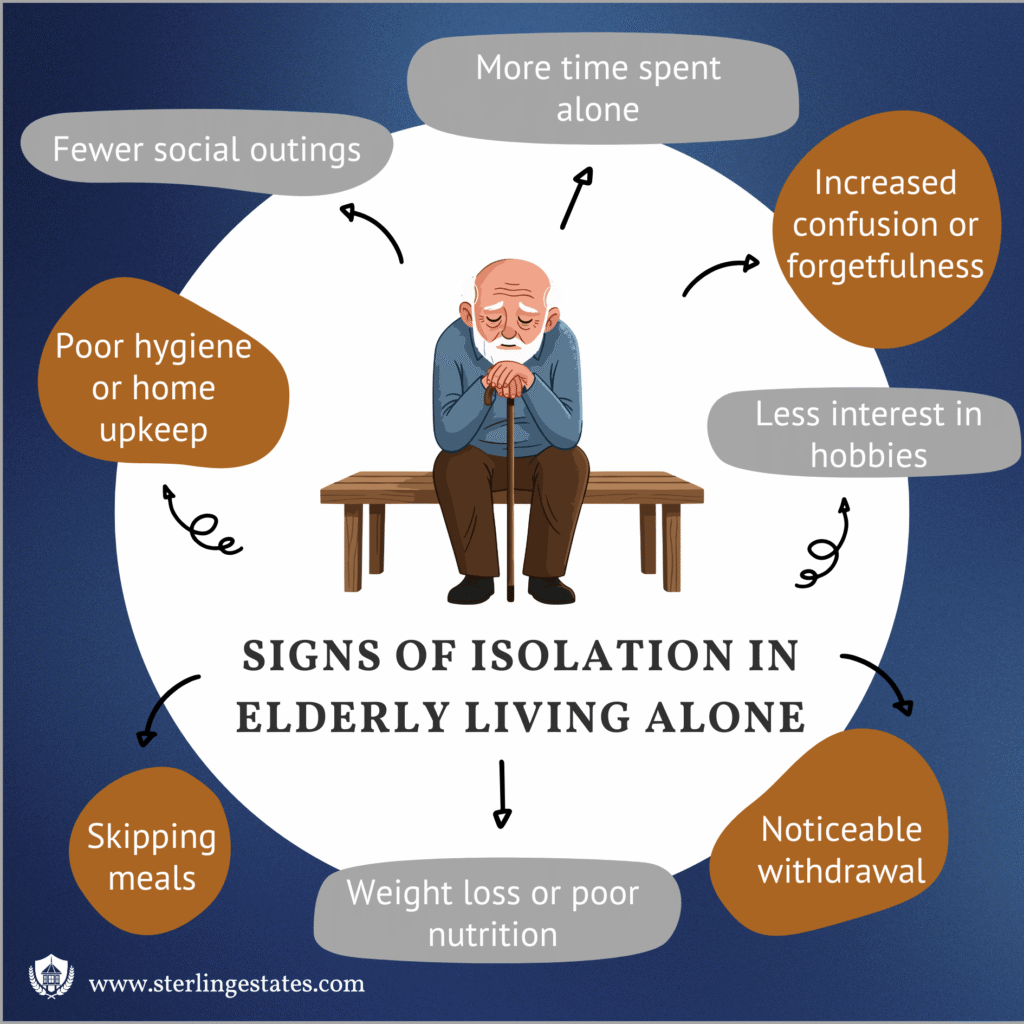
Signs of Isolation in Elderly Living Alone
The signs of isolation in elderly living alone don’t always happen overnight. These changes may be subtle at first, but over time they can signal that a loved one may benefit from more connection, structure, or support in their daily life.
You might begin to notice:
- Fewer outings or social interactions
- Less interest in hobbies or activities
- Changes in mood, such as increased quietness or withdrawal
- A home that feels less maintained than usual
- Missed meals or changes in eating habits
- Increased forgetfulness or lack of routine
These changes may be subtle at first, but over time, they can signal that a loved one may benefit from more connection, structure, or support.
What Families Can Do to Support a Loved One
Recognizing the signs of isolation in elderly living alone is the first step toward making meaningful changes. If you start noticing signs of isolation, there are thoughtful, supportive steps you can take.
Start with a Conversation
Begin by simply listening.
Ask open-ended questions like:
- “What does a typical day look like for you?”
- “Do you feel like you’re getting enough time with others?”
These conversations can provide insight while also helping your loved one feel heard and supported.
Encourage More Opportunities for Connection
Even small changes can make a meaningful difference. Consider:
- Scheduling more regular visits or shared meals
- Encouraging participation in local groups or activities
- Helping reconnect with friends or hobbies
Connection plays a key role in both emotional and physical well-being.
Take a Closer Look at the Home Environment
It may also be helpful to evaluate whether the current home still supports safety and ease of daily living. Ask:
- Are there potential fall risks?
- Are daily tasks becoming more difficult?
- Is the environment still supporting independence, or limiting it?
These observations can help guide next steps.
Explore Supportive Living Options
As needs evolve, many families begin exploring environments that offer both independence and built-in support. These settings provide:
- Opportunities for daily interaction
- Access to wellness programs
- Help with meals, transportation, or routines
- A more structured and supportive environment
Rather than replacing independence, these environments are designed to support it.
Explore independent living at Sterling Estates.
How Community Living Supports Connection
One of the most meaningful ways to address isolation is by creating opportunities for connection throughout the day. In a senior living community, connection is not something that has to be planned; it’s naturally part of daily life. Residents often experience:
- Shared meals and conversations
- Group activities and events
- Opportunities to stay active and engaged
- Familiar faces and consistent relationships
Over time, this can lead to:
- A stronger sense of routine
- Improved mood and confidence
- Increased physical activity
- A greater sense of belonging
Read: Maintaining Independence: How to Thrive in Independent Living
Independence and Connection Coexist in Senior Living
A common concern families have is whether moving to a community means giving up independence, when in reality, the goal of senior living is to support independence.
Senior living communities are thoughtfully designed to help residents maintain their routines, preferences, and sense of autonomy, while also providing the connection and support that may be missing at home.
For many older adults, this balance leads to a more comfortable, engaging, and fulfilling daily experience.
When It May Be Time to Take the Next Step
If signs of isolation are becoming more consistent, it may be time to take a closer look at what kind of environment will best support your loved one moving forward.
This doesn’t have to be an emergency decision. In many cases, the most positive transitions occur when families explore options early before a major change or emergency occurs. Planning ahead allows for:
- More choice
- More confidence in the decision
- A smoother transition overall
Frequently Asked Questions About Senior Isolation
What are the most common signs of isolation in elderly living alone?
The most common signs of isolation in elderly living alone include reduced social interaction, withdrawal from activities, changes in mood, missed meals, and declining daily routines. These signs often develop gradually and may not be immediately noticeable.
Why is isolation dangerous for older adults?
Isolation can impact both physical and emotional health. It is linked to increased risk of falls, depression, cognitive decline, and delayed medical response, especially for older adults living alone.
How can families tell if a loved one is becoming isolated?
Families may notice subtle changes such as fewer outings, less communication, changes in mood, or a decline in home upkeep. Looking at daily routines over time often provides the clearest insight.
What can families do if they notice signs of isolation?
Start with a conversation, encourage more social interaction, and assess whether the current living environment still supports safety and well-being. In some cases, exploring more supportive environments can help reduce isolation.
Can senior living help reduce isolation?
Yes. Senior living communities are designed to provide daily opportunities for connection, structured activities, and consistent support, helping older adults stay engaged, active, and socially connected.
Supporting a More Connected Future
Isolation can be subtle, but its impact is meaningful. By recognizing the signs of isolation in elderly living alone early and taking thoughtful steps, families can help older adults stay not only safe, but also connected, engaged, and supported.
If you’re beginning to explore options, we invite you to experience the Sterling Life for yourself. Schedule A Tour