
Senior Living Community vs. Nursing Home: Why They’re Not the Same Thing At All
The differences between senior living communities and nursing homes are often misunderstood. While both provide support, the differences in care, lifestyle, and long-term planning are significant. Understanding senior living vs nursing home differences can help families make more confident decisions.
While both provide care for older adults, senior living communities and nursing homes differ in how they approach independence, daily life, and levels of care. Understanding these differences can help older adults and families in the Marietta and greater Atlanta area make more informed, confident decisions for themselves and their future.
What Is a Senior Living Community?
A senior living community is designed to support older adults who want to maintain independence while having access to additional support if needed. These communities typically offer:
- Independent Living
- Assisted Living
- Memory Care
Each level of care provides a different degree of support, allowing residents to receive the right care while continuing to live as independently as possible within the same community.
Daily life in a senior living community includes:
- Social activities and events
- Wellness programs and fitness classes
- Dining and shared meals
- Maintenance-free living
- Opportunities for connection
The focus is on creating a comfortable, engaging environment where residents stay active, engaged, and connected. For many older adults, this environment offers a balance of independence, freedom, and peace of mind, supporting a confident, active lifestyle with help available when needed.
What Is a Nursing Home?
A nursing home, also known as a skilled nursing facility (SNF), is designed for individuals who require ongoing medical care.
This may include:
- Post-hospital recovery
- Rehabilitation services
- Chronic condition management
- 24/7 nursing home
Nursing homes are more clinical in nature, with care led by licensed nurses and medical professionals. Daily routines are often structured around treatments, medications, and healthcare needs.
For many families, nursing homes serve as a short-term recovery solution or even a long-term option for individuals with ongoing medical needs.
Senior Living vs Nursing Home Differences: Key Comparisons
Senior living communities focus on independence, lifestyle, and supportive care, while nursing homes provide medical care and support for individuals with a higher level of health needs. The key differences include daily life, level of care, environment, and long-term support.
- Senior living supports independence and social engagement
- Nursing homes provide clinical care and 24/7 medical oversight
- Senior living offers multiple levels of care over time
- Nursing homes are often used for rehabilitation or advanced care
Here’s a quick side-by-side look at the key senior living vs nursing home differences:
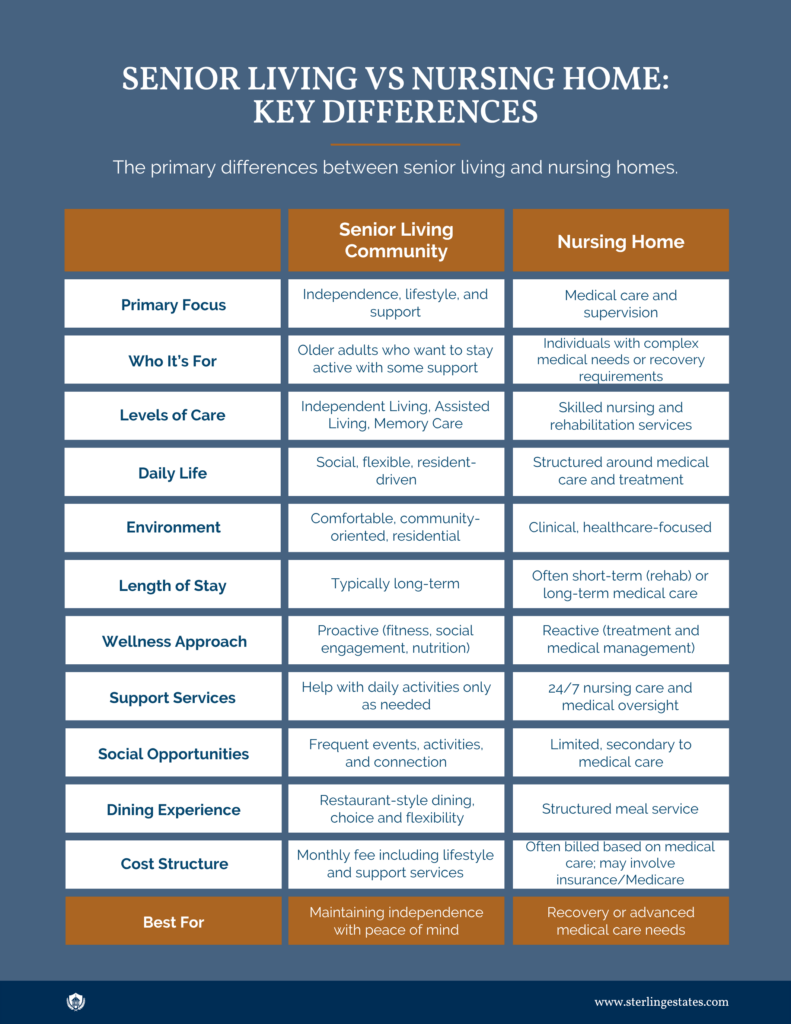
While both settings provide care, the experience and purpose of each are quite different. Let’s compare:
1. Focus of Care and Support
Senior living communities are centered around independence and personal choice. Residents maintain their routines, choose how they spend their time, stay engaged socially, and receive support only where needed.
Nursing homes are centered around medical care and supervision, often with structured schedules designed to support treatment plans.
2. Daily Life and Environment
Daily life in senior living is:
- Social
- Engaging
- Comfortable
- Resident-driven
Residents enjoy activities, shared meals, and relationships within the community.
In contrast, nursing homes are more clinical, with daily life centered around care and treatment rather than lifestyle.
3. Length of Stay and Purpose
Senior living is typically a long-term lifestyle choice focused on convenience, connection, and planning ahead.
Nursing homes are often used for:
- Short-term rehabilitation
- Post-hospital recovery
Some stays are long-term, but the primary purpose is medical care.
4. Approach to Wellness
Senior living communities take a proactive approach to wellness, offering:
- Fitness and wellness programs
- Social engagement
- Nutritious dining
- Preventative support
Nursing homes focus on managing existing health conditions through treatment and monitoring.
Learn about Sterling’s approach to wellness.
5. Cost Structure and What’s Included
Senior living typically includes:
- Housing and utilities
- Dining
- Activities and programming
- Maintenance and housekeeping
- Some care support
Nursing homes are usually billed based on medical care needs and services, sometimes involving Medicare or insurance.
Understanding what is included helps families compare value, not just cost.
Read more on what’s included in senior living costs.
How the Continuum of Care Works in Senior Living
One of the most important senior living vs nursing home differences is the concept of continuity of care. Senior living communities are designed to support residents as their needs evolve over time, offering multiple levels of care within one community. A resident will not have to move, even if their needs change over time. These levels of care include:
Independent Living
Residents live independently with access to:
- Maintenance-free housing
- Dining and hospitality services
- Social and wellness programming
This level is ideal for older adults who want to enjoy an active lifestyle without the responsibilities of homeownership.
Learn about independent living at Sterling Estates.
Assisted Living
As needs change, assisted living provides additional support with daily
activities such as:
- Medication management
- Personal care
- Dressing and bathing assistance
- Mobility support
Residents continue to maintain independence while receiving help where it is needed.
Learn about assisted living at Sterling Estates.
Memory Care
For individuals living with Alzheimer’s or other forms of dementia, memory care offers:
- Structured daily routines
- Specialized cognitive support
- Secure and thoughtfully designed environments
This level of care focuses on safety, familiarity, and quality of life.
Learn about memory care at Sterling Estates.
Short-Term Respite Care
In addition to long-term living options, some senior living communities also offer short-term respite care. This can be helpful for families who need temporary support after a hospital stay, during recovery, or while a caregiver is unavailable. Respite stays provide access to the same care, amenities, and support services, offering a safe and comfortable environment during times of transition.
Learn more about respite care at Sterling Estates.
Why Continuity of Care Matters
For many families in Marietta, one of the biggest concerns is: “What happens if needs change in the future?”
In a senior living community, residents can often transition between levels of care without leaving the environment they know. This continuity provides:
- Stability and familiarity
- Ongoing relationships with associates and neighbors
- Reduced stress during times of change
This is very different from the nursing home model, which typically addresses immediate medical needs rather than long-term lifestyle and care planning. Continuity in care is one of the main senior living vs nursing home differences.
Is Senior Living or a Nursing Home Better?
Senior living and nursing homes serve different purposes, so one is not inherently better than the other. The right choice depends on an older adult’s current needs, health conditions, and desired lifestyle.
For many families in the Marietta and greater Atlanta area, the decision comes down to whether the primary need is lifestyle support or medical care. Understanding that difference can help guide a more confident and appropriate choice.
When Is a Nursing Home the Right Choice?
A nursing home may be appropriate when someone:
- Requires 24/7 medical care
- Needs rehabilitation after illness or surgery
- Has ongoing medical conditions
- Requires specialized medical equipment
When Is a Senior Living Community the Right Fit?
Senior living may be a good fit when an older adult:
- Wants to maintain independence
- Seeks more social connection
- Needs some daily support
- Wants a safer, maintenance-free environment
- Is planning ahead for future care
Many families explore senior living before a crisis, allowing for a smoother transition.
Why Understanding the Difference Matters
The confusion between senior living vs nursing home differences is common and understandable. However, understanding the differences can help families:
- Choose the right level of care
- Avoid waiting until a health crisis forces a decision
- Focus on quality of life, not just medical needs
- Plan proactively for the future
Senior living communities are designed to support how someone lives each day, while nursing homes are designed to support how someone is cared for medically. Both are important, but they serve very different roles.
Frequently Asked Questions
Is a senior living community the same as a nursing home?
No. Senior living communities focus on independence, lifestyle, and supportive care, while nursing homes provide medical care and support for individuals with higher health needs.
Can someone move from senior living to a nursing home if needed?
Yes. If medical needs change or become more complex, families may transition to skilled nursing care. However, many senior living communities provide multiple levels of care to reduce the need for additional moves.
Is assisted living considered a nursing home?
No. Assisted living provides help with daily activities such as medication management and personal care and hygiene, but it is not a medical setting like a nursing home.
What are the biggest senior living vs nursing home differences?
The biggest difference is the focus. Senior living supports independence and lifestyle, while nursing homes focus on medical care and treatment.
Choosing the Right Path Forward
Every family’s situation is unique, and there is no one-size-fits-all answer. What matters most is understanding:
- What level of support is needed today
- How those needs may change over time
- What environment will provide comfort, safety, and peace of mind
Many families find that the right choice becomes clearer once they understand both the care options and the lifestyle each environment offers.
If you’re beginning to explore options, we invite you to learn more and experience the Sterling Life for yourself. Schedule a tour to learn more.
Next, read “10 Myths About Retirement Community Living” to continue learning about senior living.